
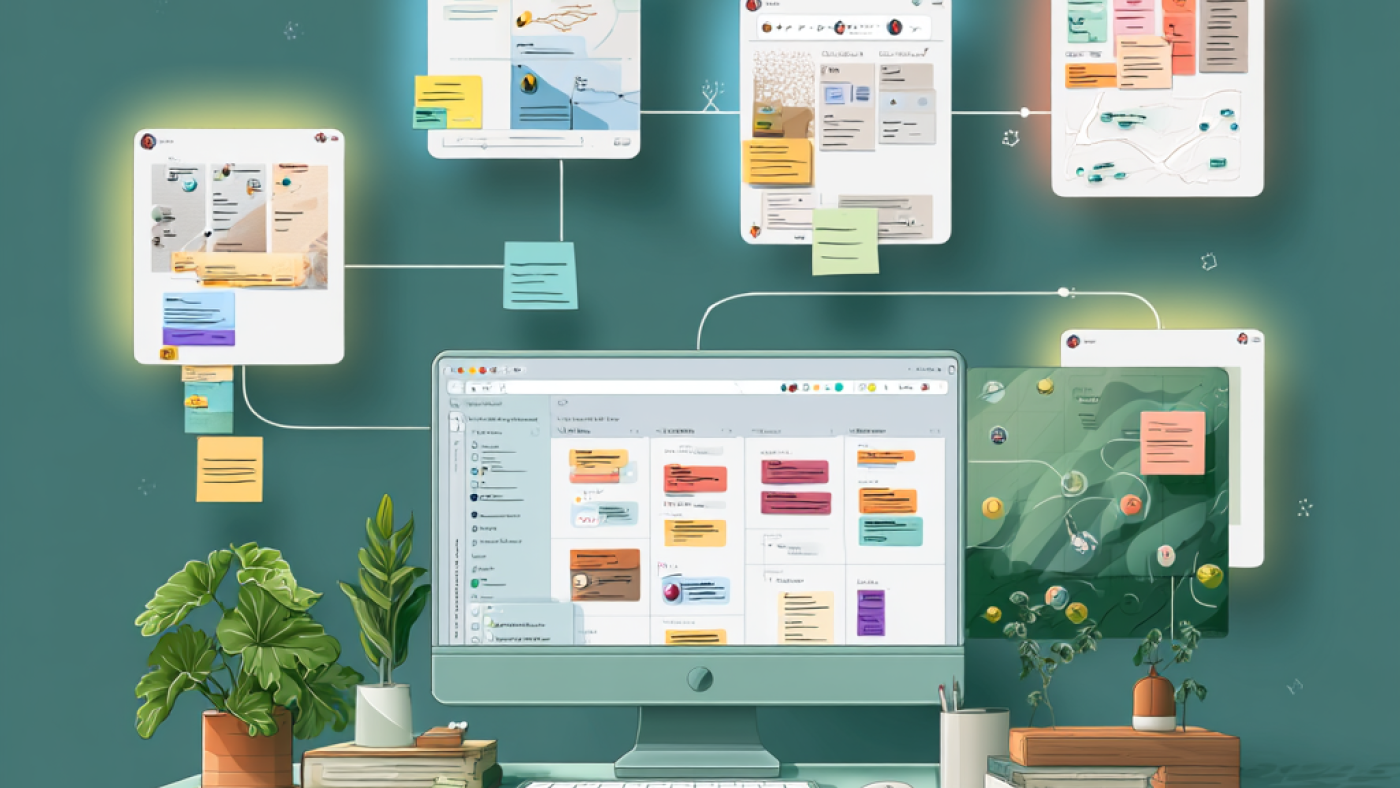
You spend two weeks running user research. You recruit participants, moderate sessions, tag observations in Dovetail, synthesise patterns, and write a report with actual findings. Then that report gets referenced in a PM summary. The PM summary gets distilled into a design brief. The design brief gets interpreted by whoever is opening the Figma file that week.
By that point, the insight is unrecognisable.
This is not a story about bad intentions. Nobody is deliberately discarding research. The degradation is structural, happening in the whitespace between tools: the gap between where research lives and where design decisions actually get made.
Follow a single finding through its lifecycle. Call it Insight Zero: "Users abandon the flow at the pricing step because they do not understand what they are paying for."
That insight, in full context, lives in your research repository. It has supporting quotes, session recordings, pattern tags, confidence ratings, and the demographic breakdown of which user segments said it most. It is specific, traceable, and rich with evidence.
Step 1. Synthesised report. The researcher condenses ten sessions into a slide deck. Insight Zero becomes: "Pricing page clarity is an issue." The supporting context stays in Dovetail. The slide deck gets sent to the product group.
Step 2. PM summary. The PM reads the report, attends the readout, and writes a one-pager for the sprint. Insight Zero becomes a line item: "Improve pricing page comprehension." The slide deck gets filed in a Confluence folder that will never be opened again.
Step 3. Design brief. The designer receives the one-pager. They are already mid-sprint on another feature. Insight Zero becomes a note in the design file: "pricing clarity: rework copy?" The intent is there. The evidence is gone.
Step 4. Figma interpretation. The designer makes the call. They update the headline, add a tooltip, and ship a version. It is a reasonable guess. But the original finding about which users, which step, which mental model mismatch: none of that is connected to the decision they just made.
Four steps. One insight. A completely different output at every stage.
The tools do not overlap. Research tools (Dovetail, Maze, UserTesting, Lookback) exist to capture and store insights. Design tools (Figma, Zeplin, Linear) exist to build from them. Nobody has claimed the space between.
Atlassian's State of Teams 2025 found that 25% of the workweek is wasted searching for information, and 72% of knowledge workers must ask someone else to find what they need. That statistic describes the research-to-design handoff precisely: the information exists, but accessing it requires a person-to-person request rather than a reliable system.
When designers cannot trace their decisions back to user evidence, they make reasonable guesses. Some guesses are right. Many are not. The product drifts from actual user needs, one design decision at a time, with no mechanism to detect the drift.
Organisations that integrate user research into product development report 2.7x better outcomes compared to those that rarely incorporate insights. Teams with democratised research cultures are 2x more likely to report that findings influence strategic decisions. The value of the research is not in question. The problem is the pipeline.
Closing the gap requires the insight to travel with its evidence. The finding, the supporting data, the user context, and the design decision it informed need to exist as a connected chain, not as a series of export-and-import handoffs between tools that do not communicate with each other.
Teams that get this right tend to do a few things differently. They bring researchers and designers into synthesis together rather than passing a finished artefact. They build lightweight rituals (brief weekly standups, linked comment threads, shared tagging systems) that keep evidence accessible at the point of decision.
The degradation chain is real. But it is not inevitable. The telephone game only works if nobody can check the original message.