
The Problem
Serious Play works because building forces clarity. People who shout loudest in meetings have nothing extra to gain when the deliverable is a model they have to narrate. But the method depends on physical presence. As teams went remote and global, that dependency turned a powerful alignment tool into a privilege of the co-located and well-funded. Shipping bricks, booking rooms, and flying people in does not scale, and the existing remote alternatives — generic whiteboards — strip out the methodology that makes the workshop work. The visually impaired are excluded further still, since the physical format has never solved for them.
The Approach
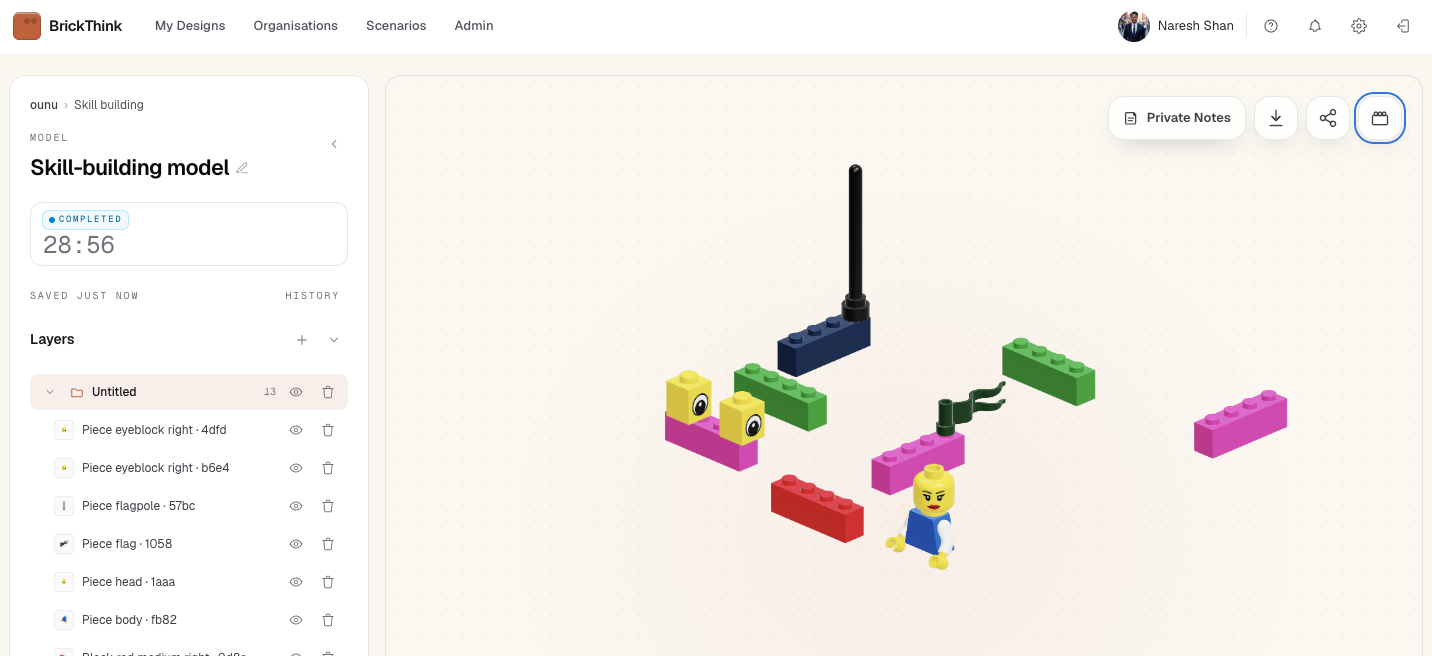
Rebuild the method, not a brick toy. Each of the five etiquette stages — skill-building, individual model, shared model, system model, guiding principles — is a first-class concept in the data model and the interface, not a loose template. The canvas is a 2D isometric tile grid with a closed 52-piece asset library, deliberately avoiding any trademark. Real-time co-presence runs on a CRDT layer so shared models stay consistent without software arbitrating disputes that should be settled by people. Claude sits underneath as an assistive layer for prompt generation, story summarisation, and principle drafting, always gated behind facilitator approval. Accessibility was a launch requirement, not a later patch: WCAG 2.2 AA, voice narration as a full alternative to visual building, colour-blind-safe palettes for a method that uses colour symbolically.
Outcomes
- Phase 1 MVP live: synchronous sessions, all five stages, seeded prompt library, text and voice story capture, PNG and JSON export — open source and free
- Full facilitator toolkit shipped: prompt library, stage controller, timer, roster management, exportable session reports
- WCAG 2.2 AA, GDPR-aligned, EU data residency from day one, closing the accessibility gap the physical method left open